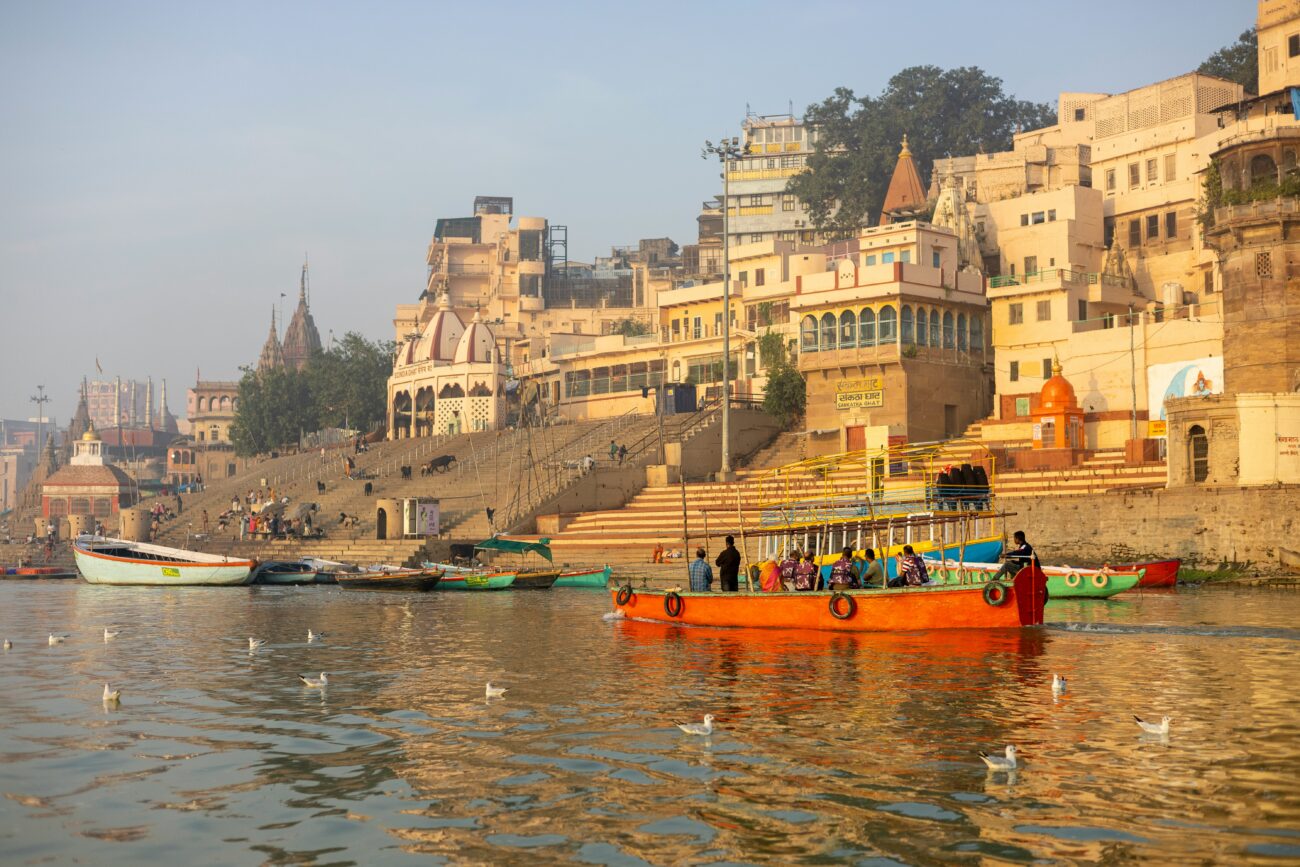
Varanasi: The Spiritual Citadel of the Ganges

Varanasi Ghats: The Sacred Heartbeat of India's Spiritual Capital ...

Varanasi is an ancient city also known as Banaras or Kashi. Situated on the banks of the Ganges River in the Indian state of Uttar Pradesh, this place is one of the oldest continuously inhabited places in the world. It is not limited to just one place; it is very sacred to Hinduism and also has deep connections with Buddhism, Jainism and Sikhism.

According to Hindus, this city is the best place to attain moksha or liberation after death. They believe that even the water of the Ganges has the power to wash away sins. Therefore, many people come here at least once in their life and bathe in the river, or bring their bodies here for cremation after death. This is a big part of their religious life.

The specialty of the city is the ghats spread along the banks of the Ganges, which are used by devotees from morning till night. Pujas, bathing, yoga and cremation are all conducted here. Manikarnika Ghat and Dashashwamedh Ghat are the most famous and crowded places among them.

The Ganga Aarti festival at night is an unforgettable experience for anyone who visits here. The bright lights, the sound of mantras, devotional songs and the water of the Ganges create a very special spiritual atmosphere.

This area is also important for Buddhists as Buddha delivered his first sermon in Sarnath, which is very close to Varanasi. The history of the sacred Tirthankaras of Jainism is also associated with this area.

This is a very complex place; it offers a deep understanding of life, death and spiritual imprint. Not only devotees, but also tourists can enjoy this place as an ancient culture. Once you visit, you will want to go back.

Comments

Popular posts from this blog

Ireland's oldest and most mysterious archaeological site

Newgrange: The mysterious 5,000-year-old building that was the gateway to the Martian world” Newgrange is arguably Ireland's oldest and most mysterious archaeological site . It is a monumental monument located on the banks of the River Boyne in Northern Ireland, Ireland, and was built around 3200 BC — older than the Pyramids of Giza, and older than Stonehenge! Interesting details: ๐Ÿ”น Mysterious Light on New Year's Eve: The specialty of Newgrange is that every year on the morning of New Year's Eve (Winter Solstice) , sunlight enters through the long stone cave behind it, filling the entire inner main chamber with light. This has been happening for 5,000 years — a mysterious creation that shows the astrological knowledge and engineering skills of the builders! ๐Ÿ”น Secret writings in stone: The spiral, triangular, and crescent-shaped designs on the outer stones of the monument remain a mystery to this day about the symbolic language of the capitalists. Scholars believe tha...

"Mihintale: The Sacred Dawn of Buddhism in Sri Lanka"

  In 247 BCE (mid-3rd century BCE, according to several historical sources), Arahant Mahinda , the son of the great Indian Emperor Ashoka , arrived in Sri Lanka to propagate the teachings of the Buddha. On the full moon day of Poson (usually in June or July ), King Devanampiya Tissa was hunting in the forests of Mihintale . At that very moment, Arahant Mahinda encountered the king on the rocky summit and delivered the Chulahatthipadopama Sutta (The Shorter Discourse on the Simile of the Elephant’s Footprint). Deeply moved by this sermon, the king embraced Buddhism. ๐Ÿ•Š️ "The Great Mission" – This historic event is known as the Mahฤ Dลซta Gamana , marking the official introduction of Buddhism to Sri Lanka. → [Image suggestion: Artistic depiction or mural of Arahant Mahinda meeting King Devanampiya Tissa at Mihintale] ๐Ÿž️ Geographical and Archaeological Significance Mihintale is a small rocky mountain range located approximately 13 kilometers east of Anuradhapura , the an...

Sigiriya

  ๐Ÿž️ ** Sigiriya – The Lion Rock Fortress of Sri Lanka ** ๐Ÿ“ **Locaion:** - **District:** Matale    - **Province:** Central Province    - **Distance from Colombo :** Approximately 170 km (about 3–4 hours by road)  ๐Ÿ“œ **Historical Background:** Sigiriya was built in the ** 5th century AD ** (around 477–495 AD) by ** King Kashyapa I **. ๐Ÿ‘‘ **The Story of King Kashyapa:** - After **murdering his father, King Dhatusena **, Kashyapa feared revenge from his brother ** Moggallana **, the rightful heir to the throne. - Moggallana fled to India, while Kashyapa moved the capital from Anuradhapura to Sigiriya and built a magnificent fortress-palace atop the massive rock. - Years later, Moggallana returned with an army. In the final battle, Kashyapa’s war elephant turned aside at a critical moment — interpreted as a sign of cowardice — and rather than be captured, Kashyapa took his own life.  ๐Ÿฐ **Architectural & Cultural Marvels of Sigiriya:** Sgiriya is c...